Post Occupancy Architecture Workshop: Interspecies Futures
Rethinking ‘TARABOT’: A forensic audit and redesign of an interspecies pavilion on the edge of its terrestrial life
In this architecture workshop, participants won’t be asked to design something from scratch. This one asks something a little harder: return to a structure that has already been built, lived in, weathered, etc., and redesign for it!
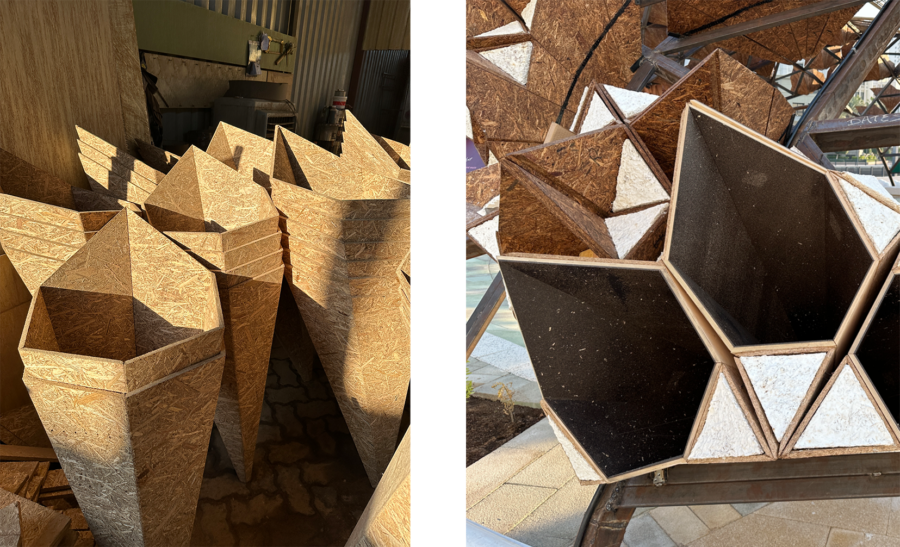
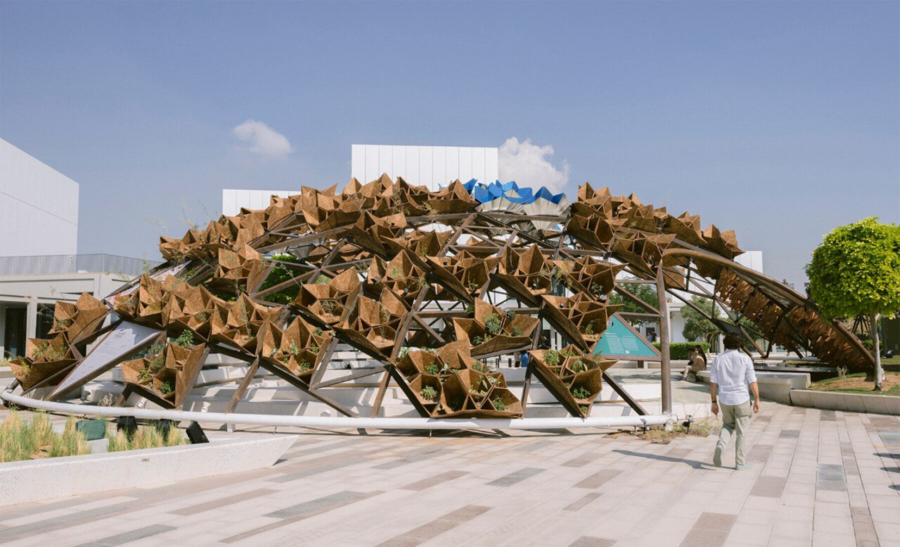
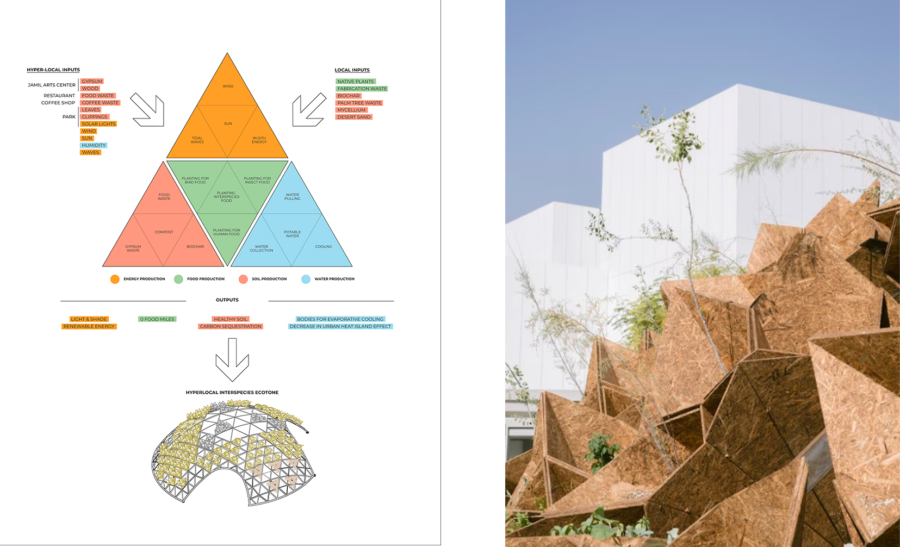
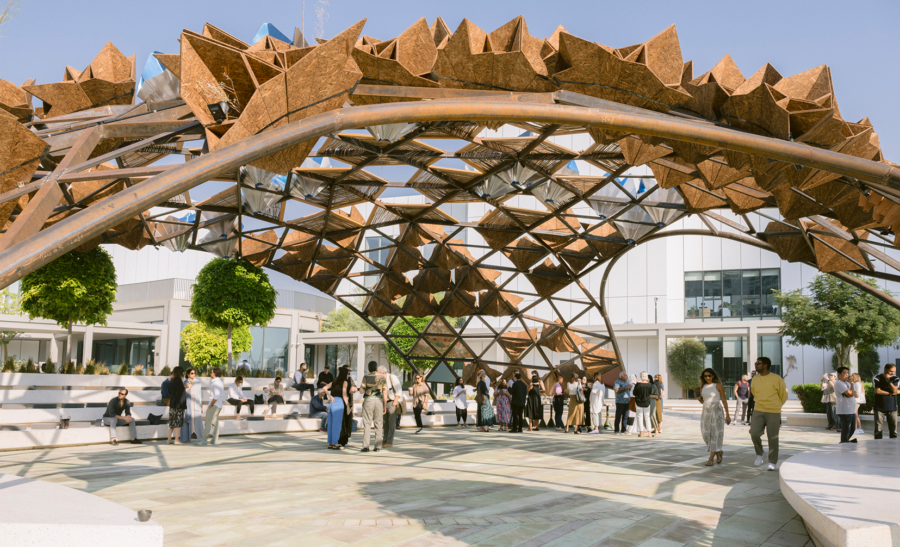
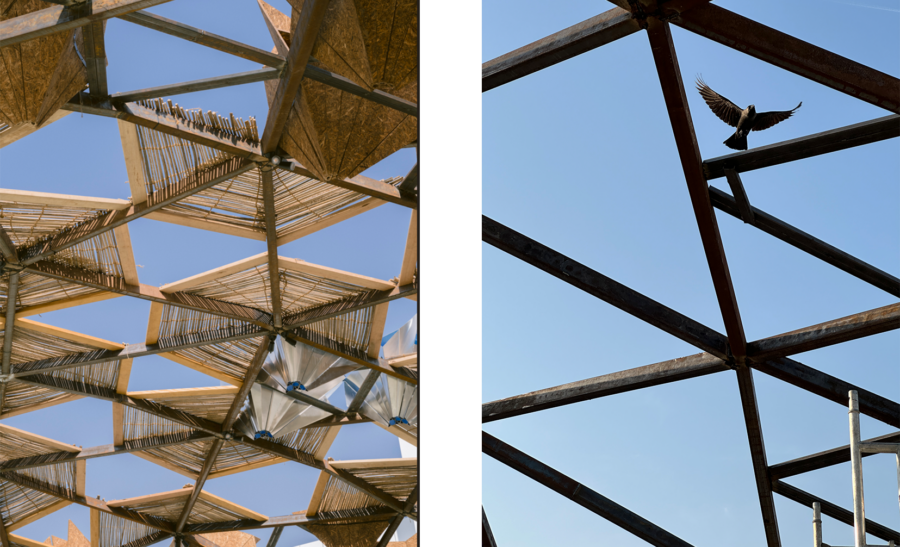
TARABOT is a large-scale steel dome pavilion commissioned by Jameel Arts Centre in Dubai in 2023. It was conceived as an interspecies structure: a built environment designed not only for human use but for active occupation and ecological support by non-human species. It was documented internationally and celebrated for its ambition. It also revealed, over time, something that most interspecies architecture projects quietly avoid admitting: that without sustained human stewardship, ecological design intentions do not self-execute. Species do not simply arrive. Systems do not simply perform.
TARABOT has a predetermined afterlife. Its steel frame is destined for submersion in the Gulf of Oman, off the coast of Fujairah as substrate for coral reef rehabilitation. Before it goes into the water, this workshop uses the structure’s final terrestrial weeks as a live research site, being open to sky, heat, dust, and scrutiny.
Over two weeks, a small cohort of students will conduct a systematic forensic audit, environmental and results driven, of TARABOT’s actual performance against its original interspecies intentions. They will identify, collectively, its single most critically failing component. They will then design and fabricate a precise architectural correction: a prototype inserted directly into the dome’s steel framework, and test it against measurable environmental and ecological criteria before the structure is dismantled and released to the creek.
The prototype does not go into the water. TARABOT does. The prototype’s output is a drawing set, a dataset, audiovisual and written documentation, and a public exhibition of it all with the 1:1 in place on the existing structure.
Applications are open. This node is limited to 12 participants and allocated on a first-come, first-served basis. No prior specialist knowledge required.
LEARNING OBJECTIVES
Upon completion of this course, students will have:
- Collected environmental data on-site using various physical computing environmental sensors.
- Applied results-management tool as a spatial and ecological performance audit, identifying where the interspecies intentions succeeded or failed.
- Learned how to convert performance data into a design position, then integrate that position into an architectural thesis process.
- Designed a 1:1 architectural prototype with a package of fabrication-ready drawings and material specifications for digital fabrication processes.
- Produced a thesis, diagrammatic design, architectural drawings, render, and audiovisuals, from design development.
- Fabricated and installed a full-scale prototype on-site at Jameel Arts Centre in coordination with the Centre’s operations team.
- Learned how to curate the produced knowledge for a public professional exhibition at one of the Gulf’s leading contemporary arts institutions.
SCHEDULE
| Days 1 to 3 | Forensic Audit and Analysis |
|
|
| Outputs → Data, analytical visual study, and design brief for the prototype | |
| Days 4 to 7 | Design Development, Testing & Fabrication Drawings |
|
|
| Outputs → Architectural and fabrication-ready drawings | |
| Days 8 to 9 | Fabrication & Installation |
|
|
| Outputs → Installed prototype. | |
| Days 10 to 12 | Documentation & Exhibition |
|
|
| Outputs → Audiovisual and written archive + public exhibition. | |
READINGS & INSPIRATION
| ReferenceS | Relevant to | |
|---|---|---|
| BAckground | Days 1 to 3 | |
| Method | Day 3 | |
| VideoS | → Introduction to Environmental Sensing and Physical Computing for Architectural Applications
→ Data-logging Techniques for On-Site Application With Specialist |
Days 2 to 4 |
| VisualS | All Days |
MENTORS & ASSOCIATES

NADER AKOUM
Head of Program
Nader Akoum is a Lebanese architect and IAAC graduate in Advanced Architecture and 3D-printed earthen architecture, currently pursuing a Master of Science in Applied Artificial Intelligence. He is the founder and Director of Studio Madane, a studio based between Beirut and Barcelona building ventures at the intersection of tech, urbanism, culture, and sociopolitical transformation. His work integrates process architecture, change management, and multiscalar engagement across Lebanon, Spain, Saudi Arabia, and wider regional collaborations in the EuroMed.
Akoum was the senior architect of TARABOT in 2023 and currently serves as Art Jameel’s Process Architect and Knowledge Manager. For this workshop, he authors and leads the overall program and brings direct knowledge of the structure’s original intentions, its documented shortfalls, and the ecological stakes of its upcoming submersion.

KARINE BAIDOUN
Computational Designer
Karine Baidoun is a Lebanese architectural designer with nearly 7 years of experience contributing to large-scale international projects across multiple phases of design development. Her work spans construction documentation, architectural drawing production, BIM coordination, fabrication detailing, and advanced 3D modeling. She operates fluently across industry-standard architectural software and technical workflows. Over the years, she has developed a particular focus on façade systems, especially metallic envelope assemblies.
For this workshop, she will oversee the participants’ design charrette process, guiding them from early design exploration to fabrication drawings and 3D models. She will also ensure that all outcomes are technically consistent with the existing structure that will host the one-to-one prototype integration.

ZAHRA MANSOOR
Exhibition Designer
Zahra Mansoor is an exhibition designer at Art Jameel, where she delivers exhibitions, commissions and public programmes; translating curatorial concepts into spatial, technical and material outcomes. Trained in architecture, her practice spans research, sculpture and film, examining how bodies and built environments are shaped by time, migration and social expectation. She works with clay, wax and found materials, making change tangible through transformation, erosion and reuse. She co-founded Another Empty House, a recognised project on vacant domestic houses in Kerala and Gulf migration.
Mansoor was a researcher and curator on TARABOT in 2023, working alongside Nader Akoum. For this workshop, she will also be bringing direct knowledge of the structure’s original intentions by guiding the participants through it, in addition to a site introduction. She will be leveraging extensive experience in exhibition design to co-curate the school’s outputs into the aspired multimedia public exhibit.

ADITHYA SURESH
Environmental Sensing Specialist
Adithya Suresh is an emerging multimedia designer, and a graduate of the Dubai Institute of Design and Innovation. His research sits between product design, systems thinking, prototyping, and material exploration, with a focus on understanding how people, objects, and environments interact. Physical computing is central to Adithya’s work, and his thesis was a multidisciplinary study that explored how design can be a problem-framing tool for observation and transformation, translating complex conditions into tangible products and systems that include sound, touch, and experience.
For this workshop, Adithya will support the processes of environmental data collection via physical computing and sensor-based observation. He will be helping participants to assemble environmental sensing kits, collect data, visualize it, and translate it into design decisions.

LOUIS TOWNROW
Studio Associate
Louis Townrow is a product designer, graduated from the Dubai Institute of Design and Innovation (DIDI) with a drive for emerging technologies and digital innovation. His work focuses on combining physical products with data and interactive experiences that address complex real-world challenges. His thesis, ‘Closing the Loop: Designing Cycles of Ocean Cleanup,’ focused on how autonomous drone systems, environmental data, and gamification can be integrated into a connected ecosystem for marine conservation encouraging long-term public engagement with environmental action.
Townrow will be working alongside Nader Akoum to monitor the design workflow from data extraction, to data-informed design, AI-powered representation, to public conversation. For this workshop, he will be directly contributing to the parametric modelling and AI-Generated visualisation.

RAZI
Production & Fabrication Specialist
Razi has been an integral part of Team Visual Solutions LLC for over 10 years and currently serves as the Production Manager. With extensive experience in production planning, fabrication, project execution, and quality control, he plays a key role in ensuring projects are delivered efficiently and to the highest standards. His expertise includes metal fabrication, woodworking, acrylic fabrication, finishing processes, installation coordination, and team management. His leadership and technical expertise have contributed significantly to the company’s operational excellence and continued growth.
For this workshop, Razi will be guiding the participants on-site at the TVS (Team Visual Solutions LLC) to learn and play with the fabrication machines. The participants that act as the fabrication and installation stewards will work closely with Razi to craft the prototypes ready for installation
LOCATIONS
Jameel Arts Centre
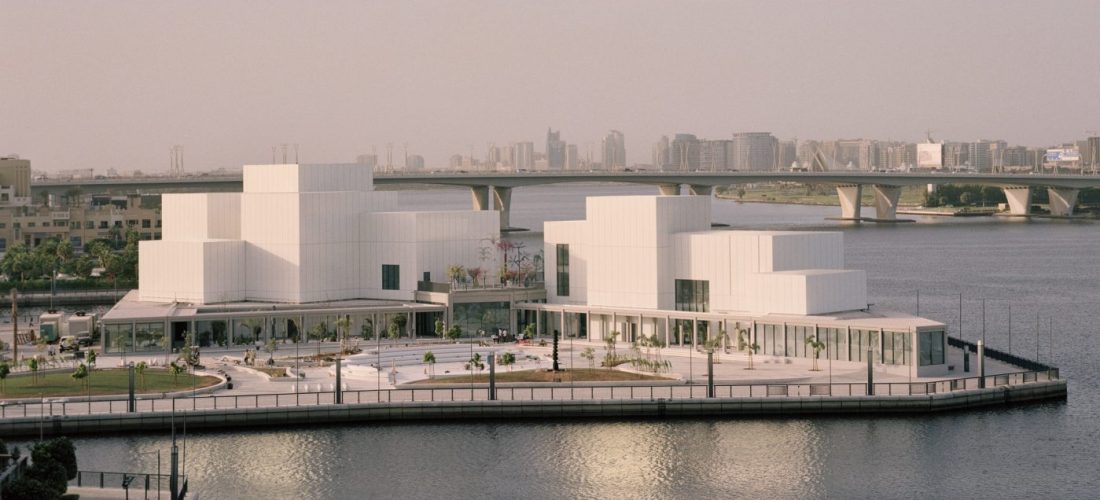
The workshop takes place at Jameel Arts Centre, situated on the Jaddaf waterfront on the edge of Dubai Creek, the same waterway into which TARABOT will eventually be submerged. Students will have full access to the TARABOT structure in its outdoor plaza, use of Jameel Arts Centre’s workshop and indoor facilities, and the run of the Centre’s gardens and public spaces throughout the two weeks.
The site is the only place where this workshop could take place. TARABOT was built here, has weathered here, and will leave from here. The Centre’s waterfront position also means the creek, TARABOT’s next home, is always present as context and horizon.
Team Visual Solutions LLC
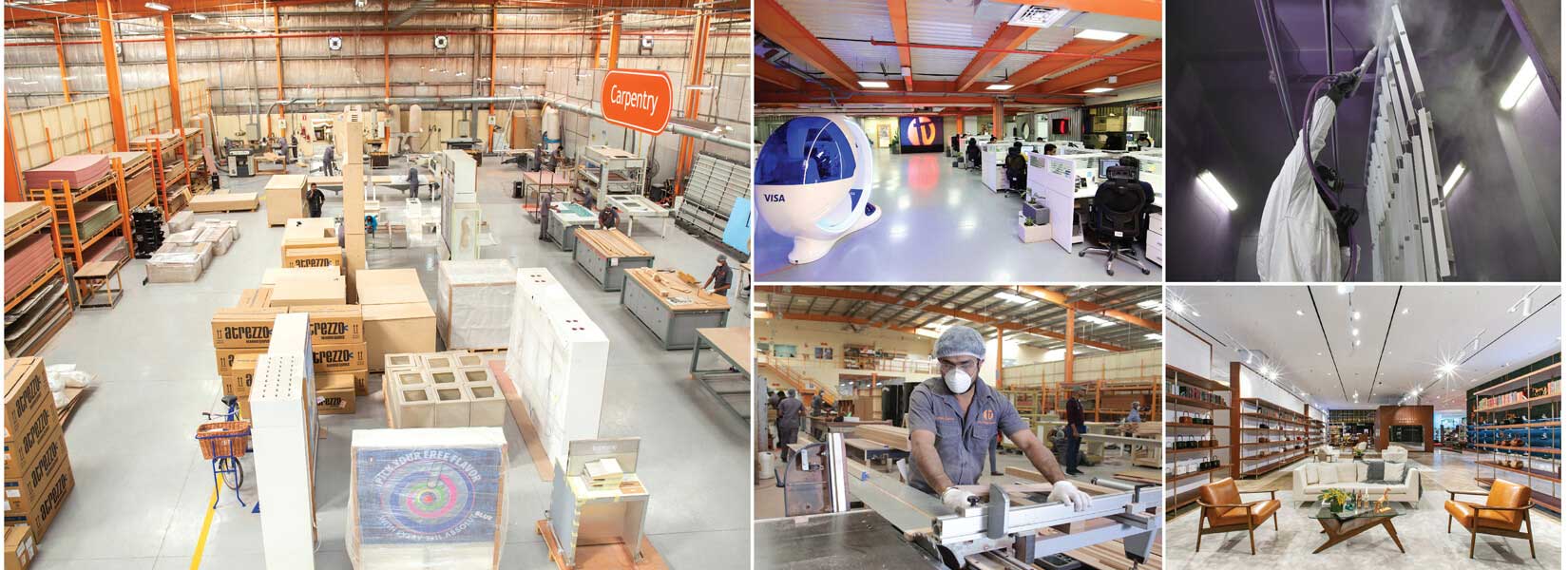
Team Visual Solutions LLC is a leading manufacturer of bespoke visual merchandising and display solutions based in Dubai. Established in 2010, the company specializes in custom displays, signage, retail fit-outs, exhibition stands, kiosks, store fixtures, and creative fabrication projects. Operating from a state-of-the-art 65,000 sq. ft. production facility, Team Visual Solutions offers a wide range of in-house capabilities, including metal fabrication, woodworking, acrylic fabrication, 3D printing, CNC machining, painting, and installation services. With a team of over 250 skilled professionals, TVS delivers innovative, high-quality solutions for retail, exhibitions, theme parks, duty-free, and commercial environments.
REQUIREMENTS
Eligibility
The GSS is open to creative and innovative people interested in fields such as architecture, urbanism, digital fabrication, design, and art, anyone searching for a multidisciplinary experience in a rich and dynamic environment. No previous specialist skills are required, although experience in design and drafting is required to contribute to the school’s outcomes. The official language of the course is English. More on eligibility inside the application form link below.
Certificate
By the end of the course, participants will have gained both theoretical and practical knowledge in interspecies architecture, environmental performance analysis, and 1:1 prototype design and fabrication. On the final day, participants will present their work at a public exhibition at Jameel Arts Centre, reviewed by invited guests, and will receive an IAAC Global Summer School Certificate.
Visa
If traveling from outside of Dubai, each participant is responsible for investigating which documents are required via the embassies in their country of origin. The school will provide a confirmation letter regarding the participation to the course, and will assist the visa process wherever is possible.
Fee
The Fee for the Dubai GSS26 is AED 2,800 which includes all required materials. There is no additional registration fee. Travel, accommodation, and food are not included. Participants must bring their own computer with digital drawings software installed. There are 12 spots available on a first-come first-served basis. Acceptance notifications will be sent upon successful registration. If the minimum of 15 participants is not reached, the node reserves the right to cancel the workshop. In such a case, all fees will be fully refunded.
TARABOT goes into the sea after this. There is no next edition. This workshop is the only time this correction will be desiged, built, and exhibited before the structure disappears. If you’ve read this far, you already know that this is for you.
PARTNERS