Global Summer School Program 2026
Online Course: Synchronous & Asynchronous Agenda.
Duration: 6th July – 10th July, 2026
GSS26 TIMBER ON TOP
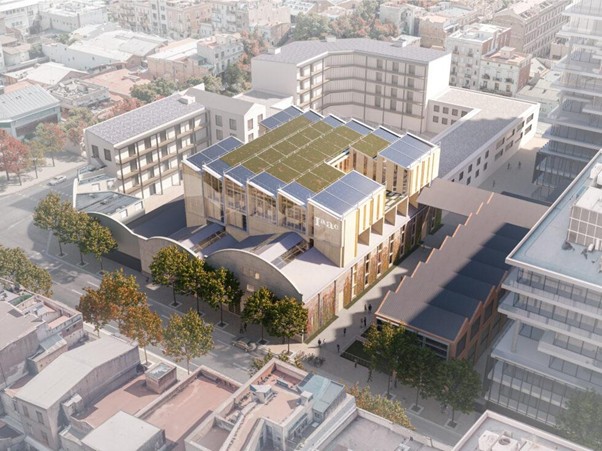
Credits: Urbantree studio
Syllabus
Key topics:Vertical Timber Extensions, Adaptive Reuse, Mass Timber Systems, Lightweight Structural Design, Prefabricated Modules, Modular Construction, Circular Renovation Strategies – Structural Feasibility, Urban Densification, Low-Carbon Design
More than 85% of today’s buildings are expected to remain in use by 2050, yet nearly 75% of them are currently energy inefficient. At the same time, cities around the world face growing housing shortages and increasing pressure to reduce carbon emissions. Vertically extending and renovating existing buildings with circular timber systems offers a powerful strategy to address these challenges simultaneously. By combining deep energy retrofits with lightweight timber additions, cities can increase usable space while advancing urban decarbonisation and densification goals.
As an alternative to demolition and new construction, engineered timber is an ideal material for adaptive interventions due to its carbon sequestration potential, biophilic qualities, structural lightness, and compatibility with industrialised prefabrication and modular assembly. Prefabricated timber systems are particularly well suited to interventions in dense urban environments, where shortened construction times, reduced on-site noise and dust, and minimal disruption to occupants and neighbours make timber-based extensions a practical and efficient solution. Expanding upon recent research supported by the Built by Nature network and governmental innovation agencies, the Timber on Top course introduces students to pioneering built projects from frontrunning countries such as the Netherlands, the UK, Sweden, and Spain. Through case studies and design exercises, participants will explore enabling design techniques, regulatory frameworks, and environmental, technical, and architectural potentials of vertical timber extensions.
Learning objectives
At course completion the student will:
- Understand the role of vertical extensions and adaptive reuse in urban decarbonisation and housing strategies.
- Evaluate the structural potential of existing buildings for timber-based additions.
- Gain knowledge of different mass timber construction systems (such as CLT, glulam, and hybrid assemblies) and understand their suitability for vertical extensions.
- Understand the advantages of engineered timber systems for lightweight construction.
- Apply principles of prefabrication and modular timber construction to vertical extensions.
- Develop design proposals integrating architectural, structural, and environmental considerations.
- Understand the regulatory and economic frameworks influencing rooftop developments.
- Analyze built case studies and extract transferable design strategies.
- Develop a holistic design approach that considers the existing building as part of a larger material and environmental system.
Previous Knowledge / Students background requirements
The workshop is open to all applicants with a bachelor’s degree (or in progress) in any field related to Architecture, Design, Arts, and Engineering. Basic knowledge of Rhino is appreciated.
Faculty team
Michael Salka, Co-Director & Technical Director at IAAC
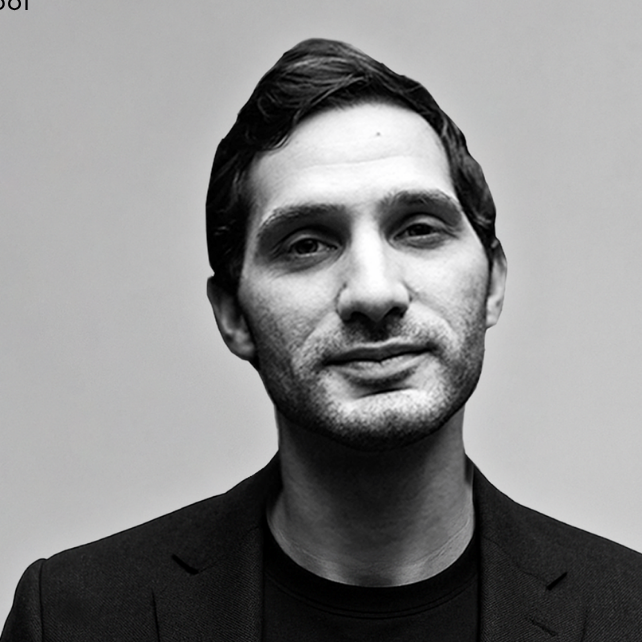
Michael Salka is Co-Director of the Master in Ecological Architecture and Advanced Construction, and Technical Director of Valldaura Self-Sufficient Labs at the Institute for Advanced Architecture of Catalonia (IAAC). On behalf of IAAC, he is also a Founding Partner of the New European Bauhaus (NEB) Academy. Additionally, he is a Teaching Associate in History & Theory of Architecture and Design for the Department of Architecture at the University of Cambridge, where he previously completed his doctorate as a Gates Cambridge Scholar (2021 – 2025). His career has harnessed environmental forces through the planning, design and construction of water infrastructures in Rwanda via Engineers Without Borders (2012 – 2014); net-zero energy neighborhoods and mixed-use urban infill developments as an architect in the USA (2014 – 2018); and prototypical engineered timber buildings, public spaces, and future ‘Biocities’ as a researcher in Spain (2018 – 2021), amongst numerous other constructions. To date, his portfolio comprises 75 built works across the USA, Europe, Africa, and Asia. He has published articles in peer-reviewed journals (2013 – 2022), reports on biobased social housing in Latin America for the World Bank and Inter-American Development Bank (2023), and books such as Transforming Biocities (2023), as well as developed international participatory ecological urbanism projects funded by the European Institute of Innovation and Technology (EIT) and the New European Bauhaus (NEB) (2020 – 2022). His built works feature in popular media outlets such as The New York Times (2021).
Esin Aydemir, Architect & Program coordinator at IAAC

Esin Aydemir is a practicing architect specializing in timber structures. After graduating from Istanbul Technical University, she began her career at a construction firm focused on timber construction. Esin has furthered her expertise with two studies: the Wood Program at Aalto University and a Master’s in Mass Timber Design (MMTD) at IAAC. Currently, she serves as the Academic Coordinator for the Master in Advanced Ecological Buildings and Biocities (MAEBB) program at IAAC, a role she has held for two editions. During this time, she has coordinated and managed the final design+build projects of both the Mobile Cabin/Catalyst (MO.CA), Cathedral of Robotic Artisans (CORA) and Forestone.
Workshop Schedule